 Edinburg Mobile Home Leveling
 Pier & Beam House Leveling in Edinburg, TX
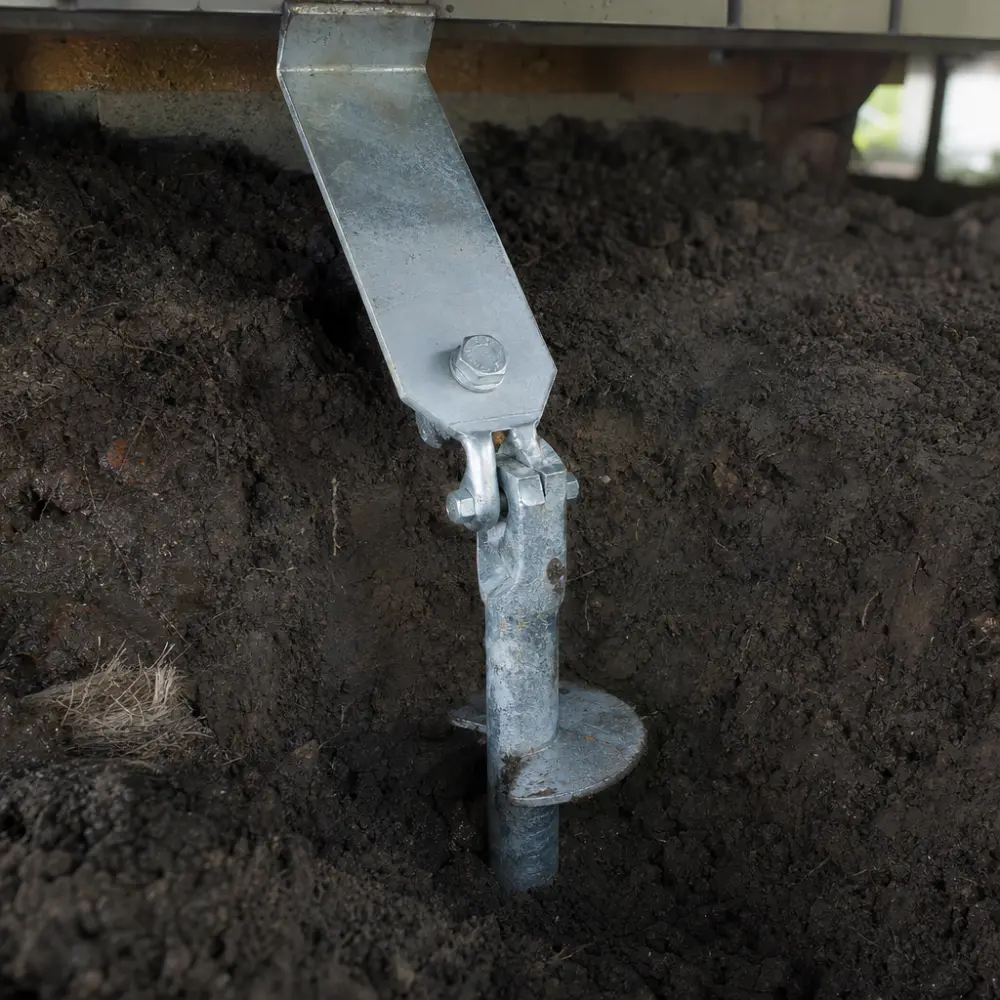
House leveling is what the Valley calls the job of bringing a settled pier-and-beam house back to flat. The crew surveys the floor with a level, lifts the wood sills and beams on hydraulic jacks carried by cribbing, replaces the piers that have sunk or tipped with new ones on proper footings, sisters any joists that sagged while the floor was low, and shims the beams tight before letting the load back down. We arrange that work across Edinburg and Hidalgo County through insured local foundation crews. A typical relevel runs $1,500 to $4,500. A house that needs many piers, sistered joists, or a new beam runs $4,500 to $12,000. The survey is free and the written scope comes before anyone lifts anything.
Two things up front. This page is about site-built houses on wood floors over piers. If your home is a manufactured home on a steel frame, the job is different and it is on the mobile home leveling page. And if your house sits on a concrete slab, that is slab foundation repair, a separate trade with different tools, and we do not do it.
House leveling and mobile home leveling are not the same job
Both get called house leveling around here, so it is worth being precise.
A manufactured home rides on two steel I-beams. The beams sit on block piers, and releveling means shimming the beams back into one plane within limits Texas sets by rule: no more than an inch of shims, no more than four inches of wood on a pier. The chassis is stiff, the lifts are small, and the state licenses the people who do it.
A pier-and-beam house has no steel. Wood sills run around the perimeter and wood beams run under the floor, both resting on concrete, block, or sometimes brick piers. Floor joists span between the beams and the subfloor sits on the joists. When a pier drops, the beam sags into the gap, the joists follow, and the floor above develops a dish. Left long enough, the sag becomes permanent: joists take a set, sill plates rot where they touch damp ground, and a beam that has carried its load on a tipped pier for ten years may be cracked. Leveling a house means fixing the piers and the wood both, and there is no state licence for it.
That last point matters. Chapter 1201 of the Texas Occupations Code, the Manufactured Housing Standards Act, covers manufactured homes only. Nobody at the state licenses house levelers. So the checks that protect you are the ordinary ones: a current certificate of insurance, a written scope that says how many piers and which joists, and a couple of references you actually call.
Why the clay does this
The USDA soil survey of Hidalgo County maps two very different grounds within a few miles of each other.
North of the expressway, under most of Edinburg and the higher parts of McAllen and Mission, the mapped soil is the Hidalgo series, a well-drained sandy clay loam with 23 to 35 percent clay in the subsoil and low shrink-swell. Houses on it settle the plain way, a footing pressing into loam, and the fix is usually a bigger footing under a new pier.
South of Pharr and Alamo, east of Weslaco, and toward the river below Donna and Mission, the map turns to Harlingen clay, Mercedes clay, and Runn silty clay. The official description of the Harlingen series puts its clay content at 60 to 75 percent and says its cracks “remain open from 150 to 210 cumulative days in most years.” Raymondville clay loam, mapped north of San Juan, cracks “3/4 inch to 2 inches wide” to depths of 30 to 40 inches when dry. These are shrink-swell soils. They take on water and expand; they dry and contract. A pier standing on one moves up in a wet fall and down in a dry summer, and a house has piers on both the shaded, wet side and the sun-baked, dry side.
The weather works the cycle hard. McAllen’s 1991 to 2020 normals put September at 4.61 inches, the wettest month, right after an August that normals a 99.6 degree high. The June 2018 flood dropped 18.31 inches on a gauge west of Mission, and Hurricane Hanna in July 2020 left standing water 18 inches to 4 feet deep east of Edinburg and around Mission. Clay that swelled under those piers shrank as it dried, and the floor shows it a season later.
What a house relevel involves
The survey. The crew shoots the floor with a level from a datum point, room by room, and produces a map of the floor’s highs and lows. Then they go underneath. Every pier gets checked for tip, crack, and whether it is carrying anything at all; every sill and beam gets probed for rot; joists get sighted for sag and checked at the bearing points. Older houses in the Valley’s original townsites often carry decades of previous fixes, and those get noted too. The written scope and price come from this, before anything is lifted.
The lift. Hydraulic jacks on cribbing, placed under beams at the low piers, working in small increments across several stations so the house comes up as a unit. A pier-and-beam house is more flexible than a steel chassis, which means it tolerates more before it cracks and also means one jack cranked too far at one point will crack plaster and bind doors on the other side of the house. Slow and spread out is the whole technique.
The piers. Failed piers come out. New ones go in on footings sized for the soil, which on clay means a wider pad set below the depth where the ground cracks open. Concrete piers with a proper footing outlast stacked block, and both outlast the brick and stone piers common under houses built before the 1960s.
The wood. A sagged joist gets a new joist bolted alongside it, sistered, bearing on the same beam. A sill that rotted at the ground gets cut back to sound wood and replaced. A cracked beam gets sistered or replaced, which is the item that pushes a job into the upper range.
The shims. Steel or hardwood shims driven tight between pier and beam, then the jacks eased off and the floor re-shot.
What it costs
| Work | Typical range |
|---|---|
| Survey with written floor map and scope | Free |
| Relevel, shims and a few replacement piers | $1,500 to $4,500 |
| Relevel with many new piers, sistered joists, or a replaced beam | $4,500 to $12,000 |
| Manufactured home relevel, for comparison | $450 to $1,400 |
| Slab foundation repair | Not offered |
Toward the low end: a one-story house that dropped an inch or two on one side, sound sills, room to work underneath. Toward the high end: a house that has been low for years, rotted sills along the wet side, several piers that have to be replaced on new footings, or a main beam that cracked. Everything is itemized, and the pricing page shows the full table.
Permits, and what to ask
Whether a building permit applies to a relevel depends on the scope and where the house sits. Inside the city limits, Edinburg Building Safety at 415 W University Dr administers the 2018 International Residential Code and the city’s Unified Development Code. Outside the city, Hidalgo County Planning at 2818 S. Business Hwy 281 handles development permits. Ask before work starts; a crew that tells you not to call is telling you something.
Before you hire anyone, including us: get the insurance certificate with the policy dates on it, get the pier count and joist list in writing, and get the floor map from the survey so you can compare bids on the same facts.
When to call
Call when the floor dishes toward one room, when a marble rolls the same way in every room, when doors on one side of the house stick every fall, or when a crack opens over a door and keeps widening.
We cover Edinburg, McAllen, Mission, Pharr, San Juan, Alamo, Donna, and Weslaco. The FAQ covers the rest.
Frequently Asked Questions
How much does house leveling cost in Edinburg?
A typical pier-and-beam relevel with new shims and a few replacement piers runs $1,500 to $4,500. A house that needs many new piers, sistered floor joists, or a replaced beam runs $4,500 to $12,000. The survey is free and the written scope comes before anyone crawls under with a jack. Slab foundation repair is a different trade and we do not quote it.
What is the difference between house leveling and mobile home leveling?
A manufactured home sits on a steel I-beam chassis over block piers, and releveling it means shimming the beam back to plane under a state licence. A pier-and-beam house has wood sills and floor joists resting on concrete or block piers, and leveling it means lifting the sills, replacing failed piers with new footings, and often repairing wood that rotted or sagged while the floor was low. The Valley trade calls both jobs house leveling. They are different jobs.
Why do pier-and-beam houses in the Valley go out of level?
Clay. South of Pharr and Alamo the mapped soil is Harlingen clay, 60 to 75 percent clay, whose cracks stay open 150 to 210 days a year. It swells after the September rains and shrinks through a 99-degree August, and the piers under the wet side of the house move differently from the piers under the dry side. The well-drained Hidalgo sandy clay loam under most of Edinburg moves less but still settles under a small footing.
Do I need a permit or a licensed contractor?
Chapter 1201 of the Occupations Code licenses manufactured home installers only, so there is no state licence for site-built house leveling. That makes your own checks matter: proof of insurance, a written scope with the pier count, and references. Whether a building permit applies depends on the scope, so ask Edinburg Building Safety at 415 W University Dr or Hidalgo County Planning at 2818 S. Business Hwy 281 before work starts.