 Edinburg Mobile Home Leveling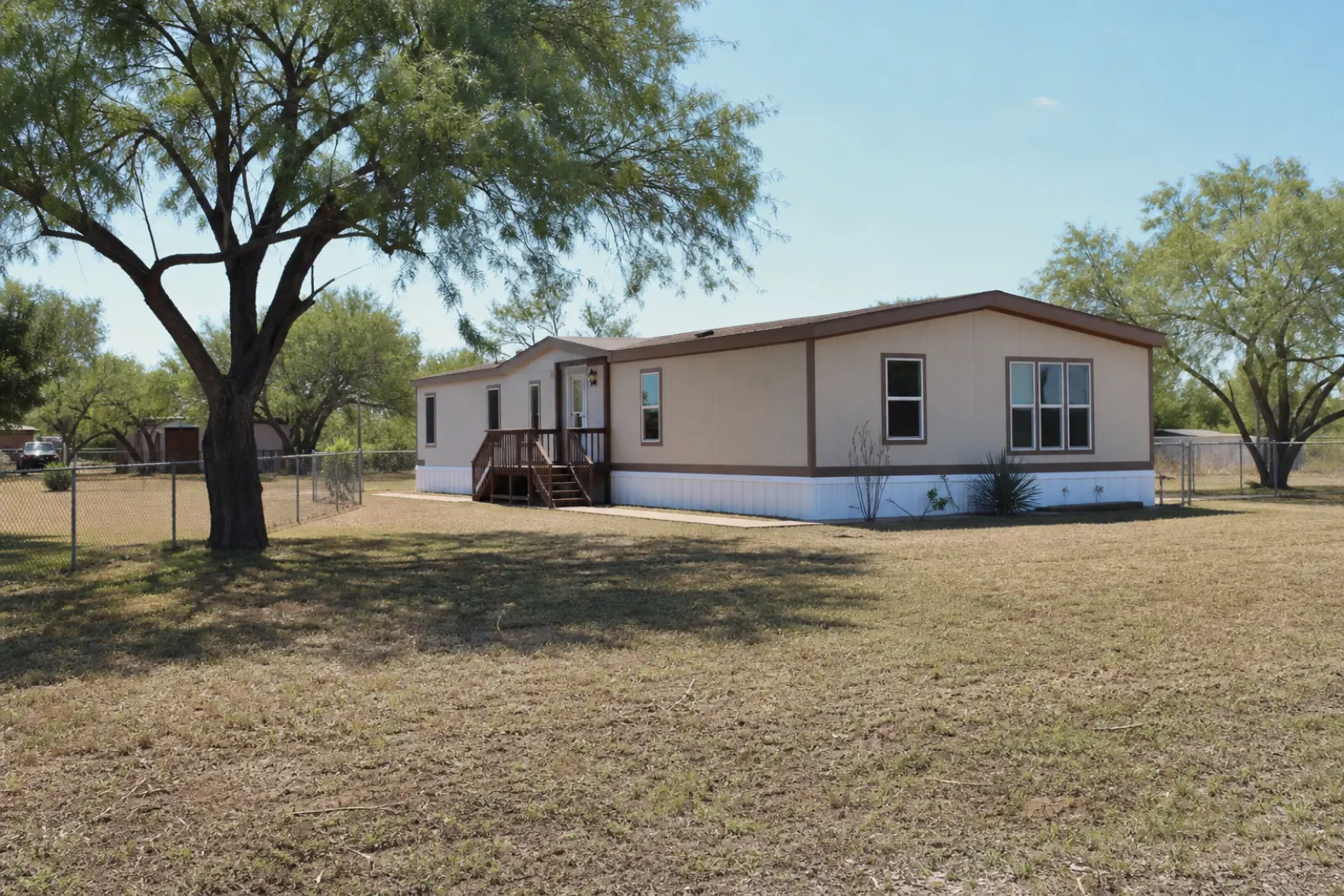
Edinburg Mobile Home Leveling puts settled manufactured homes and pier-and-beam houses back on the level line across Hidalgo County. Every pier gets shot with a water level, the frame comes up on hydraulic jacks carried by solid cribbing, and each low pier is rebuilt with fresh hardwood shims until the whole chassis reads flat again. A singlewide relevel is $450 to $800, a doublewide $750 to $1,400, and a pier-and-beam house relevel $1,500 to $4,500. The survey that tells you exactly what your home needs costs nothing.
Sticking doors, a hallway with a lean in it, a ceiling seam that has opened on a doublewide: those are the reasons people call, and in the Valley they all trace back to the same two things, the clay and the rain.
House leveling and mobile home leveling are two jobs
Around here the trade calls itself house leveling, and a lot of the calls are for site-built houses, not manufactured homes. It is worth being clear about the difference before anyone quotes you.
A pier-and-beam house is a wood-framed house with a crawl space, its floor joists carried on wood beams that rest on concrete or block piers. When the ground under a pier moves, the beam drops or lifts with it and the floor above follows. Leveling one means jacking the beams back to plane, shimming or replacing the piers, and often sistering joists or replacing a beam that has rotted or sagged. That is carpentry and concrete work, done by a foundation crew, and it runs $1,500 to $4,500 for a typical house and $4,500 to $12,000 when a lot of piers, joists, or a beam have to be replaced. Our house leveling page explains it.
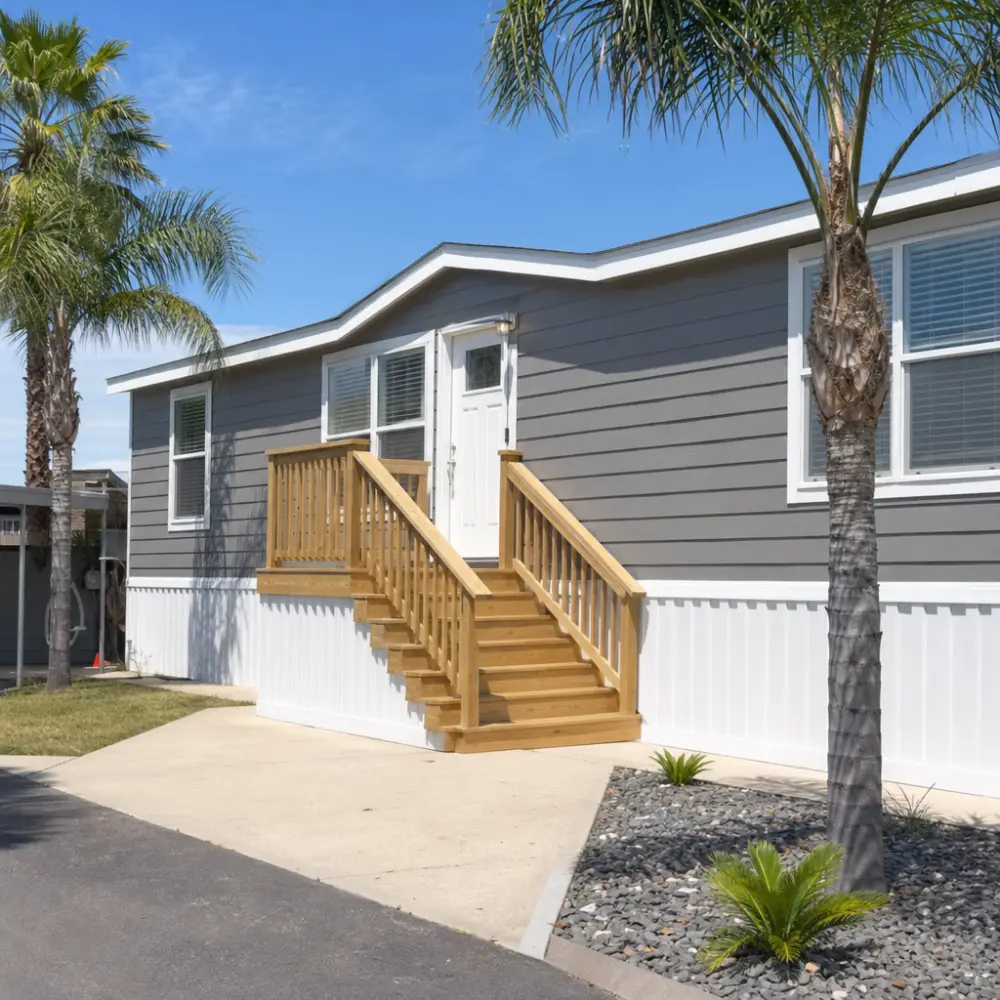
A manufactured home is built on a steel I-beam chassis and set on block piers with a cap and hardwood shims between the pier and the beam. Releveling one is a pier-by-pier job on that chassis, and Texas treats it as licensed installation work under Chapter 1201 of the Occupations Code. That is the $450 to $1,400 job, and it is most of what this site is about.
Both suffer from the same ground. The fix is different.
The clay is the reason
Hidalgo County is not sand country, and anyone who tells you the Valley settles because of sandy soil has not looked under a home here. The USDA Natural Resources Conservation Service maps the county’s soils, and the most extensive series by far is Hidalgo, a well drained sandy clay loam covering roughly 191,000 acres of the county. Its type location is a cultivated field about 1.8 miles northwest of Donna. It is the ground under most of Edinburg, the north side of McAllen, and the citrus and sorghum land toward Mission. It drains moderately, carries a pier load reasonably well, and settles the ordinary way: a little each wet season, faster under a downspout, until the frame racks.
Come south toward the old Rio Grande delta and the ground changes. The Harlingen and Mercedes clays, mapped south of Pharr, south of Alamo, and east of Weslaco, are 45 to 75 percent clay by the NRCS series descriptions, with very slow permeability. The Harlingen description says its cracks “remain open from 150 to 210 cumulative days in most years.” Raymondville clay loam, mapped north of San Juan, cracks “3/4 inch to 2 inches wide at the upper end” to depths of 30 to 40 inches when it dries. The Runn silty clay lies under the low ground south of Donna, Mission, and Weslaco. NRCS rates the shrink-swell of the Harlingen and Mercedes series at a linear extensibility of 17, against about 4.5 for the Hidalgo loam.
That number is the whole story. A shrink-swell clay takes on water and pushes up, then loses it and pulls away. A pier sitting on it does not just sink. It rides up in a wet September, drops through a dry June, and lands somewhere different from where it started, and the pier next to it under a roof valley or a dripping AC line does something else again. The frame racks in two directions instead of one.
Then there is the weather that drives it. NOAA’s 1991 to 2020 normals for McAllen Miller International Airport put annual rainfall at 24.17 inches, of which 13.60 inches, 56 percent, falls June through October. September alone normals 4.61 inches, the wettest month of the year. The August normal high is 99.6 degrees and July’s is 98.5. So the clay bakes and cracks all summer, then takes the year’s biggest rain in one month. That is the cycle under every pier south of Business 83.
The floods do the rest. In the Great June Flood of 2018 the National Weather Service recorded 18.31 inches at a gauge 4.3 miles west-southwest of Mission, 15.57 inches a mile northeast of Weslaco, 11.36 in McAllen, and 10.16 in Edinburg, with “11 to 13 inches” falling in a few hours at Weslaco and at least 2,700 homes and businesses flooded in Mission and McAllen. Hurricane Hanna in July 2020 dropped 14.40 inches northwest of Mission and 9.78 in Edinburg and left 18 inches to 4 feet of water standing east of Edinburg and around Mission. Water standing in a crawl space for days softens the bearing under every footing pad, and the settling that follows shows up months later as a sticking door.
The upshot is a maintenance interval rather than a repair. Homes on the loam generally go three to five years between relevels. Homes on the clay can need it sooner. That is not a sales line. It is why this business exists.
What settling looks like from inside the house
You rarely notice it from the yard. You notice it living in it.
- Doors rub, then drag, then stop latching. The opening is no longer a rectangle.
- Windows bind in their tracks, and sometimes crack at a corner.
- Floors slope or bounce. Put a marble down. If it travels, you are not imagining it.
- Cracks open at wall and ceiling joints, usually above doorways where the racking concentrates.
- A doublewide’s marriage line opens. The seam down the center separates at the ceiling or floor because the two halves are no longer at matched height.
- Skirting bows or pulls away as the home moves onto panels that were never meant to carry weight.
Any one of those earns a free level check. Settling compounds: a pier that is an inch low today is grinding its own cap and shims, and it will be lower after next September. Caught early it is a straightforward relevel. Left a few more seasons it becomes pier rebuilds, and the difference on the invoice is measured in hundreds of dollars.
What a relevel involves
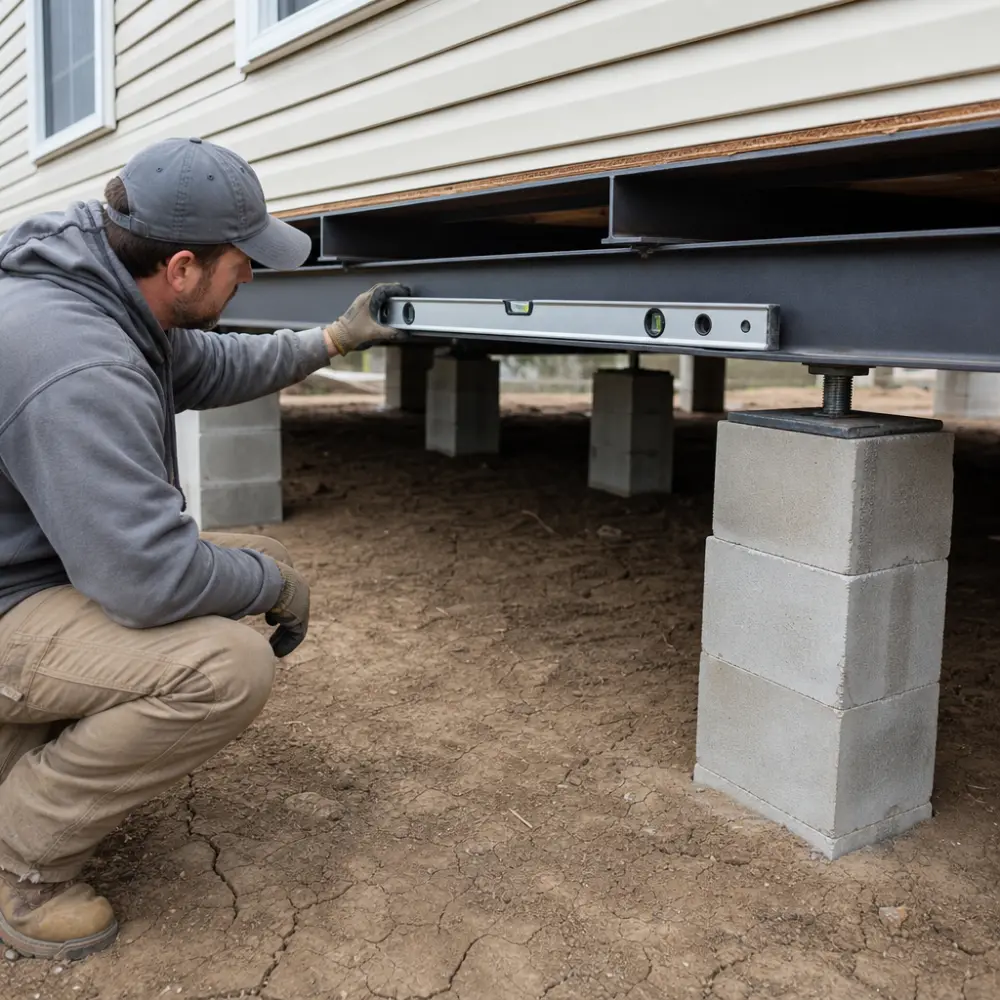
The survey. Access panels off, crew under the home end to end, every pier shot with a water level off a datum pier. You get a number per pier rather than an opinion. Pads, caps, and shims get handled, the belly gets checked, and every anchor strap gets looked at for tension and rust. The written price comes out of this, before anything is lifted.
The lift. Twenty-ton bottle jacks on solid wood cribbing at the frame near each low pier, working in small increments across several stations so the chassis comes back toward plane as a unit. The rule that separates competent work from dangerous work is simple: the cribbing carries the load, never the jack.
The pier work. Blocks re-stacked or replaced, crushed caps and pads swapped out, hardwood shims driven tight in opposing pairs from both sides of the I-beam. The Texas generic installation standard at 10 TAC 80.23 caps shim height at one inch and allows no more than four inches of wood, shims included, between the pier and the beam. A pier that cannot reach the beam inside that allowance gets rebuilt at the right height instead of stacked taller. That is priced separately and openly.
The verification. The frame is re-shot end to end. Every pier has to be carrying load, which you confirm by hand, because a home can read level while standing on piers that are doing nothing. On a doublewide both halves have to read matched at the center row.
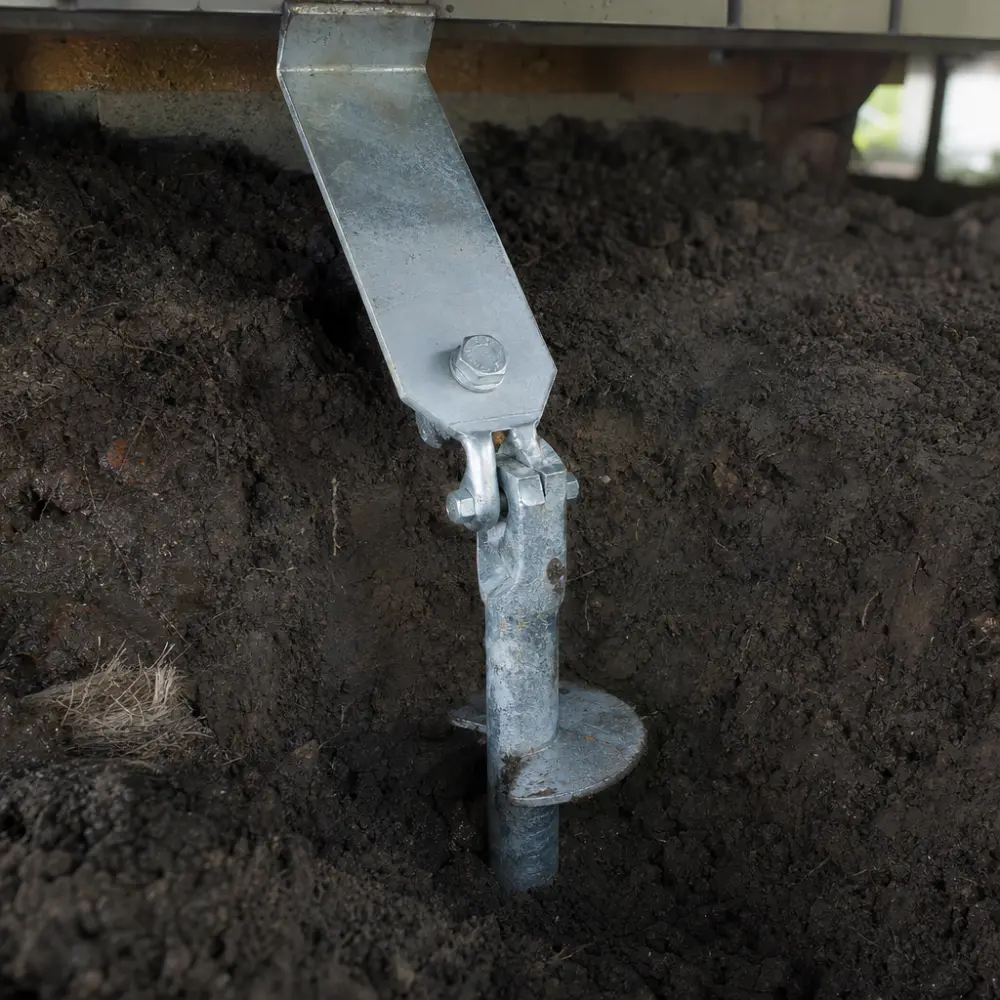
The straps. Anchor straps get re-tensioned, because raising the home changes the tension they were set at. If the anchor system is short, corroded, or missing stabilizer plates, you get told and it gets quoted separately rather than quietly added.
Everything we do
- Mobile home leveling. The core service. Survey, lift, shims, whole-frame verification, most homes in a day.
- Pier and beam house leveling. Site-built houses on the same clay: jack, shim, new piers, sistered joists. $1,500 to $4,500 typical.
- Pier and pad repair. Reset, reshim, or fully rebuild settled piers and the footings under them. $75 to $150 a pier to reset, $150 to $400 to rebuild.
- Tie-downs and anchors. Install, replace, and re-tension ground anchors and straps to the Texas installation standard for HUD Wind Zone I, which is where 24 CFR 3280.305 places Hidalgo County.
- Vapor barrier replacement. Repair or replace the sealed underbelly that keeps ground moisture out of your insulation, ducts, and subfloor.
- Skirting repair. Panels, vents, and access doors, including the storm damage that arrives some summers.
- Pre-sale leveling inspection. A written level, support, and anchoring report for parks, lenders, insurers, and buyers. $150 to $350, credited toward any work it finds.
The rates, published
Almost nobody in this trade will give you a number before they are standing in your yard. Ours have been on the website since it went up.
| Service | Typical range |
|---|---|
| Relevel, singlewide | $450 to $800 |
| Relevel, doublewide | $750 to $1,400 |
| Pier-and-beam house relevel | $1,500 to $4,500 |
| Pier reset or reshim | $75 to $150 per pier |
| Pier rebuild | $150 to $400 per pier |
| Anchors and tie-downs | $600 to $3,500 |
| Vapor barrier | $300 to $800 patch, $1,200 to $4,500 full |
| Skirting | $200 to $800 repair, $900 to $2,500 full |
| Pre-sale inspection | $150 to $350 |
Every leveling job starts with the free survey and ends with a firm written number. The pricing page covers what pushes a job inside its range, and the cost calculator will put a range on your home now.
Wind Zone I, and why the anchors still matter
Here is a fact most anchor salesmen in the Valley will not volunteer. Hidalgo County is HUD Wind Zone I. The federal standard at 24 CFR 3280.305 lists the Texas Wind Zone II counties by name, Cameron, Willacy, Kenedy, Kleberg, Nueces, and the rest of the coast, and every county not on the list is Zone I. Section 1201.256 of the Texas Occupations Code repeats the same list and says plainly that “all other counties are in Wind Zone I.” The 100 mph design zone starts at the Cameron and Willacy county lines, roughly where the Mid-Valley turns into the coast.
That does not mean the wind stays there. Hurricane Dolly came ashore at South Padre Island on July 23, 2008 as a Category 1 and still gusted to 71 mph at Weslaco Airport, 60 mph at Edinburg, and 52 mph at McAllen, forty miles inland. Hurricane Hanna made landfall on Padre Island National Seashore on July 25, 2020 with 90 mph sustained winds and gusted 60 mph at McAllen, 59 at Weslaco, and 54 at Edinburg, and the Weather Service’s summary says hundreds of poorly built homes were damaged and dozens of buildings in colonias were left uninhabitable.
A Zone I anchoring system is designed for exactly that kind of load, and it only works in tension. Straps go slack every time the home settles or heaves, which on clay is every year, and anchor shafts corrode below grade where nobody looks. That is why tie-down work and leveling are one conversation here rather than two, and why straps are re-tensioned as part of every relevel. The Texas tie-down page sets out what the state standard actually requires.
Who is allowed to do this work
Texas is specific about it. Chapter 1201 of the Occupations Code, the Manufactured Housing Standards Act, defines installation in section 1201.003(13) as the construction of the foundation system and placement of the home, and says “the term includes supporting, blocking, leveling, securing, anchoring.” Section 1201.101(d) says a person may not act as an installer without an installer’s license. The licence comes from the Texas Department of Housing and Community Affairs, and a licensee posts a $25,000 bond or other security, completes state-approved instruction, renews on continuing education, and gives every customer a written installation warranty under section 1201.361 that runs two years.
That is the manufactured home side. Pier-and-beam house leveling on a site-built house is not TDHCA-licensed work; it is foundation work done by an insured crew, and the City of Edinburg’s building permit application requires general liability insurance or a $10,000 surety bond from anyone pulling a permit. Whether a stand-alone relevel or anchor retrofit on an existing home needs a local permit is a question for the City of Edinburg Building Safety Department at 415 W University Dr or the Hidalgo County Planning Department at 2818 S. Business Hwy 281, and the crews we work with pull whatever those offices require. Section 1201.008(d) of the Occupations Code limits what a local government may charge or require for installation work done by a licensed installer, which is worth knowing if somebody quotes you a permit fee that sounds invented.
We bring this up unprompted because it protects you. Every manufactured home crew arranged through us is a licensed, insured Texas installer. Ask every bidder for the same, check it on the installer licence page, and pay attention to who gets quiet.
Where we work
Crews run out of Edinburg along US 281, which carries I-69C south to the I-2 interchange in Pharr, and along I-2 and Business 83 east and west. McAllen is ten miles southwest, the largest city in the county. Pharr and San Juan are the near south side, about fifteen minutes. Alamo and Donna sit on the clay east along I-2, with the Winter Texan parks along Business 83 and the Val Verde Road corridor. Mission is west past McAllen, and Weslaco is the far end of the Mid-Valley, twenty-one miles and under half an hour.
Book the free level check
Tell us what you are noticing, a door that will not close, a hallway with a lean, a seam that has opened, along with whether it is a manufactured home or a pier-and-beam house, its size, and where it sits. A crew comes out, shoots every pier, and writes the price at the home while the readings are fresh. You get a pier-by-pier map, a firm number, and a straight answer about what needs doing now versus what can honestly wait. Questions first? The FAQ covers most of them, or read how we work.