 Edinburg Mobile Home Leveling
 Mobile Home Pier & Pad Repair in Edinburg, TX
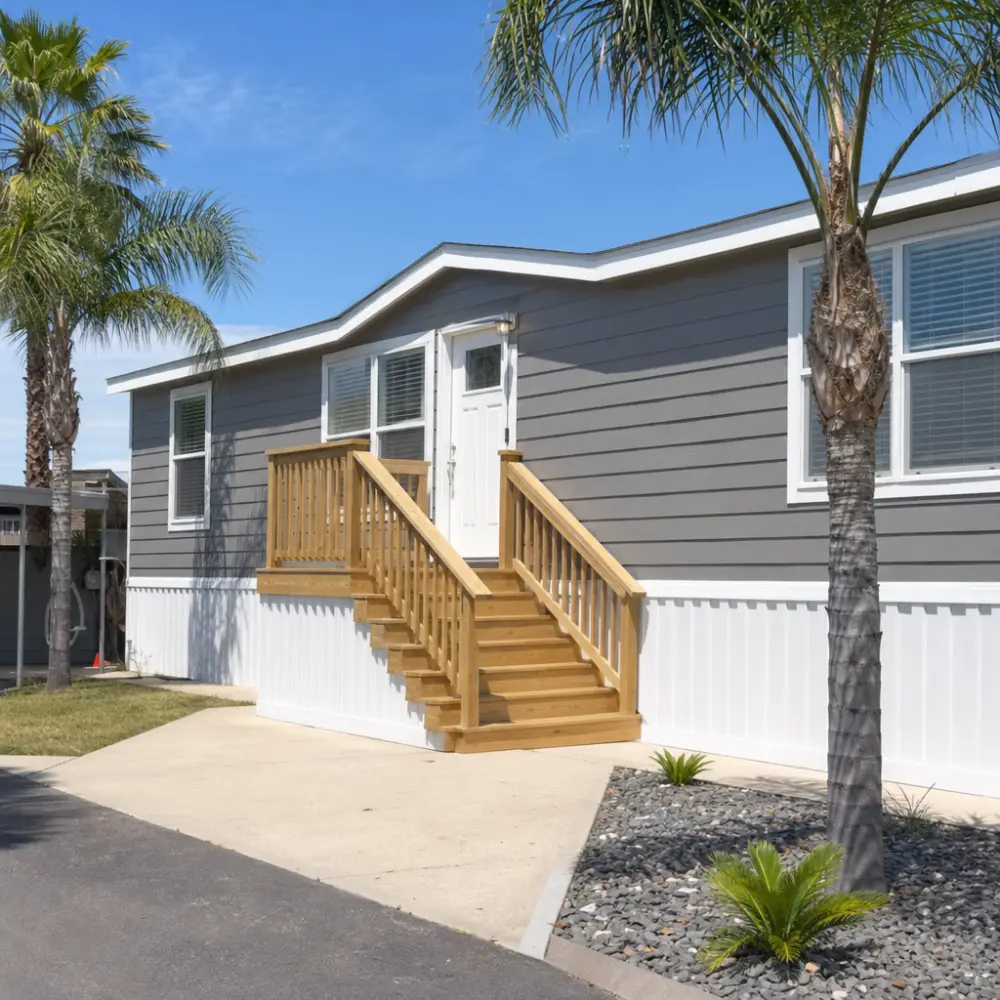
Pier and pad repair is the part of a relevel that the shims cannot do. A pier that has dropped past the shim limit, cracked a block, crushed its cap, or pushed its footing into the clay gets reset or rebuilt from the ground up: a new pad sized to the soil, blocks re-stacked to the rule, a new solid cap, and fresh hardwood shims. We arrange that work across Edinburg and Hidalgo County through licensed, insured Texas installers. A reset runs $75 to $150 per pier, a rebuild $150 to $400, and the free level check counts exactly how many your home needs before you see a number.
Most relevel calls touch three to eight piers. A home that nobody has been under in fifteen years might need most of them. Either way the survey says which, and the pricing page shows where each one lands.
What a pier is, and what fails
Under a manufactured home each pier is a short column: a footing pad on the ground, concrete blocks stacked on the pad, a cap on the blocks, and shims between the cap and the steel I-beam. The pad spreads the load into the soil. The blocks carry it. The cap and shims make the last inch of contact.
Each part fails its own way.
The footing sinks. A pad that is too small for the soil under it presses in. On the well-drained Hidalgo sandy clay loam that covers most of the county’s high ground around Edinburg and McAllen, that is slow, ordinary settlement. On the Harlingen clay south of Pharr and Alamo, or the Mercedes clay east of Weslaco, the ground swells wet and shrinks dry, and a pad rides that cycle, tipping as it goes. The Harlingen series description puts its clay at 60 to 75 percent and says the cracks stay open 150 to 210 days a year. A pad set on ground that cracks that deep does not stay where it was put.
The blocks crack or lean. Hollow blocks stacked with the cells sideways, or stacked on a tipped pad, split under load. A leaning pier carries less every year until it carries nothing.
The cap crushes. Wood caps rot where they sit in a damp crawl space, and a rotted cap compresses under thousands of pounds. Under homes that stood in water during Hurricane Hanna in 2020 or the June 2018 flood, rotted caps are the rule, not the exception.
The shim stack grows. Every time someone shimmed the pier instead of rebuilding it, the stack got taller. Texas caps it. 10 TAC 80.23 limits shims to 1 inch and allows “a maximum of 4 inches of wood including shims” on top of a pier. A stack past that is both out of rule and a structural problem, because tall stacks of wedges walk out under vibration.
The Texas rules the work follows
Texas publishes generic installation standards in 10 TAC Chapter 80, and a pier rebuild follows them whether or not the manufacturer’s own instructions are still around.
Soil bearing. Section 80.23(a) lets the installer determine soil bearing with a pocket penetrometer, from USDA soil surveys, from local building-code tables, or from a soil report. The crew carries the penetrometer.
Footer capacity. The rule’s footer table is the whole reason pad size matters. A 16 by 16 by 4 inch footer carries 2,700 pounds at 1,500 psf soil and 3,500 at 2,000 psf. A 20 by 20 carries 4,100 at 1,500 psf. A 24 by 24 carries 6,000. On soft or wet clay the answer to a sinking pier is a bigger pad, and the table says how big. Footers carrying more than 8,000 pounds need a double-stacked pier.
Spacing. End piers must sit within 24 inches of the end of the main frame. Spacing along the beam comes from the rule’s tables by home width, soil bearing, and footer size; the worked example in the rule puts a 16 by 76 foot single section on 1,500 psf soil with 16 by 16 footers at 4 feet on center. Spacing can stretch up to 30 percent around an obstacle as long as the pier count stays the same.
Shims and caps. Wedge shims from both sides of the beam, minimum 3 by 6 inches, stack no taller than 1 inch. Concrete caps need a wood plate; wood caps do not. Four inches of wood, total, is the ceiling.
What the crew does
Survey and count. Every pier is shot with a water level off a datum and every pad, block, cap, and shim stack is handled. A pier you can rattle by hand is carrying nothing and its load has gone to its neighbors, which is how one failed pier becomes three. The survey produces the count and the price.
Lift on cribbing. Jacks go on solid wood cribbing at the frame near the pier, and the beam comes up just enough to take the load off. The cribbing carries the home while the pier is apart. Never the jack.
Rebuild. The old pad comes out if it has sunk or tipped. A new pad sized from the footer table goes on ground cleared of debris, sod, and organic material, which the rule requires. Blocks go on with the hollow cells vertical and the courses turned. A new cap. New shims driven tight in opposing pairs.
Re-shoot. The frame gets read again after the jacks come off, and the pier gets pushed by hand to confirm it is bearing.
What it costs
| Work | Typical range |
|---|---|
| Reset or reshim an existing pier | $75 to $150 per pier |
| Rebuild or replace a pier (new pad, blocks, cap, shims) | $150 to $400 per pier |
| Typical whole-home pier job | $500 to $2,500 |
| Relevel it rides along with, singlewide | $450 to $800 |
| Relevel, doublewide | $750 to $1,400 |
A reset means the blocks are sound and the pier just needs to be brought back to the beam with new shims and maybe a new cap. A rebuild means the stack comes apart and a bigger pad goes under it. Rebuilds cost more because they take longer and use more material. The cost calculator builds a range from these numbers and your best guess at pier condition.
The drainage question
A pier rebuilt on the same wet ground will sink again. The state’s own rule at 10 TAC 80.21(h) says water build-up under a home “may cause shifting or settling of the foundation,” and it puts responsibility for site drainage on the owner of a used home outside a rental community. So the crew looks at where the water goes: a downspout dumping onto one corner, a yard graded toward the skirting, a low spot that held Hanna’s floodwater. Fixing that is the only thing that makes a rebuilt pier stay rebuilt, and the crew will point at it.
Related pages: mobile home leveling, soft or bouncy floor, water under the home. Crews cover Edinburg, McAllen, Pharr, Mission, Weslaco, Donna, Alamo, and San Juan at the same prices.
Frequently Asked Questions
What does pier repair cost?
Resetting or reshimming an existing pier runs $75 to $150 during a relevel. Rebuilding one with a new footing pad, new blocks, and a new cap runs $150 to $400. Most relevel calls touch three to eight piers; a typical whole-home pier job lands between $500 and $2,500. The survey counts them for free before you see a price.
When does a pier need rebuilding instead of shims?
When it cannot reach the beam inside the Texas rule. 10 TAC 80.23 caps the shim stack at 1 inch and allows a maximum of 4 inches of wood, shims included, on top of a pier. A pier that dropped past that has to be rebuilt to the right height. A cracked block, a footing pressed into clay, or a cap crushed to splinters also means a rebuild, whatever the height.
How big should the footing be?
It depends on the soil bearing capacity, and the state lets the installer measure it with a pocket penetrometer or read it from the USDA soil survey. On the Texas footer table a 16 by 16 inch pad carries 2,700 pounds at 1,500 psf soil; a 24 by 24 pad carries 6,000. On the Harlingen and Mercedes clays south and east of the county, the fix for a sinking pier is usually a wider pad, not a taller stack.
Can I just stack another block under it myself?
No. Blocking and leveling are installation under Section 1201.003 of the Occupations Code and require a TDHCA installer's licence. Beyond the law, a home held up by a jack with no cribbing is how people get hurt, and a block stacked on a footing that is already sinking will sink with it.